
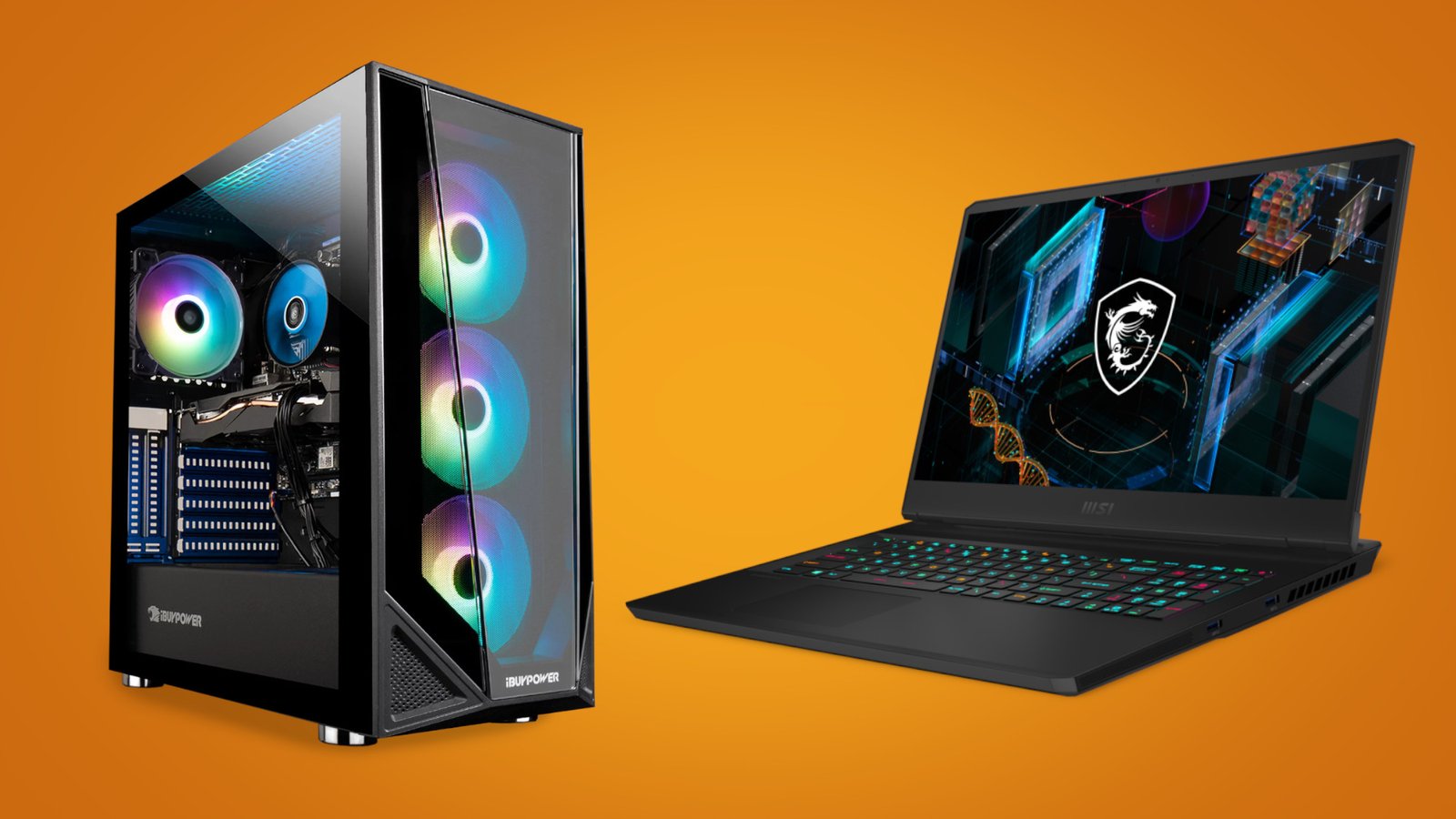
The decision between buying a gaming laptop or a desktop PC has never been more nuanced. With major improvements in hardware, portability, and price-to-performance ratios, both setups now serve specific types of gamers and computing needs.
Whether you’re casually playing games during a break or streaming high-frame-rate matches on Twitch, your choice will impact performance, comfort, and even long-term flexibility. So, which option actually makes more sense today? Let’s break it down.
Portability: The Laptop’s Biggest Advantage
Gaming laptops shine when it comes to mobility. Unlike traditional setups, they allow you to game from virtually anywhere, your desk at home, a coffee shop, or even during travel. This level of flexibility is ideal for professionals who travel often and digital nomads who enjoy gaming as part of their downtime.
Many of today’s top-tier laptops, like the ASUS ROG Zephyrus, Razer Blade 16, or MSI Stealth series, offer serious horsepower in compact, well-built frames. You’ll find high-refresh-rate displays, RTX GPUs, fast SSDs, and advanced cooling systems, all built into devices slim enough to slide into a backpack. This makes them not only convenient but surprisingly powerful for their size.
They’re also incredibly versatile. Whether you’re running demanding titles like Cyberpunk 2077 or casually passing time with lighter favorites like card sims or casino games, a good gaming laptop handles both ends of the spectrum with ease. That kind of adaptability is hard to match, especially when you’re always on the move.
Of course, portability comes at a price. Laptops with comparable specs to desktops often cost more. You’re also limited in terms of internal upgrades, and performance can sometimes be throttled to manage heat in smaller chassis. Still, for gamers who value freedom and flexibility, these trade-offs may be worth it.
Performance: Desktops Still Lead the Pack
Despite how far laptops have come, desktops still dominate in raw performance. Whether it’s AAA gaming, video rendering, or simulation tasks, desktops like those built with Intel i9 or AMD Ryzen 9 processors and RTX 4080/4090 GPUs will always outperform their mobile counterparts.
Desktops are less constrained by heat, power consumption, and space. This allows for better thermals, quieter cooling, and stable overclocking. Brands like Alienware, NZXT, or custom setups using Corsair or Cooler Master parts provide high performance without compromise.
If you’re into competitive titles like Battlefield 6, Counter-Strike 2, or Starfield at ultra settings, the desktop still reigns supreme.
Upgradability: Desktops Offer the Long-Term Edge
One of the biggest downsides of gaming laptops is limited upgradability. Most laptops allow for a RAM or SSD swap, but the CPU and GPU are usually soldered onto the motherboard. Once performance becomes outdated, replacing the whole system is often your only option.
With desktops, you can gradually upgrade parts. Start with an RTX 4060 and move up to an RTX 4080 later. Swap in a better PSU or add liquid cooling. Add more storage as needed. This flexibility allows desktops to adapt and grow with your needs and wallet.
Cost: What You Pay vs What You Get
Gaming laptops tend to be more expensive than similarly specced desktops. You’re paying for the engineering behind portability, battery life, and thermal solutions in a compact form. A $2,000 laptop may match the gaming performance of a $1,400 desktop, but with lower upgrade potential and louder fans.
On the desktop side, there’s more room to find value. Since you’re buying parts individually, you have the flexibility to shop around for deals on graphics cards, processors, memory, and more. This often results in better price-to-performance ratios. Building or buying a custom PC also lets you skip features you don’t need, which are standard on laptops.
That said, desktops do come with extra costs if you’re starting from scratch. You’ll need to factor in the price of a monitor, keyboard, mouse, and possibly speakers. Laptops, on the other hand, are all-in-one packages that work right out of the box.
Display and Experience: Bigger Screens, Better Control
Laptops usually come with 15- or 17-inch screens. Some premium models offer mini-LED or OLED panels, but size is the limitation. Desktops let you pair with a 27″ 1440p monitor or even go ultrawide with 34″ or 49″ curved displays. This makes a huge difference in immersion, especially for titles like Elden Ring or Microsoft Flight Simulator.
Moreover, the desktop experience often includes mechanical keyboards, gaming mice, and surround sound or quality headsets. You’re not confined to a trackpad or laptop speaker setup.
Noise, Heat, and Power Consumption
Gaming laptops can run hot and noisy, especially under full load. Compact cooling systems try their best but often sound like jet engines. Performance throttling also happens when the heat builds up, reducing frame rates and responsiveness.
Desktops handle thermals better, thanks to larger heatsinks, more fans, and often more intelligent airflow. They also consume more electricity overall, but do it more efficiently in performance terms.
Final Takeaway: It Depends on Your Life, Not Just Specs
So, which makes more sense today: gaming laptop or desktop PC?
It really depends on how and where you game, your budget, and your plans for the future. Gaming laptops are convenient, sleek, and powerful enough for most casual and mid-tier gaming experiences. Desktops, on the other hand, offer maximum performance, better value, and long-term flexibility.
If you’re after portability with decent power, go for the laptop. If you’re building a long-term setup or chasing high frame rates and modding potential, stick with the desktop.
Both choices are better than ever. The right one? That’s tied to your lifestyle, not just what’s inside the case.
