
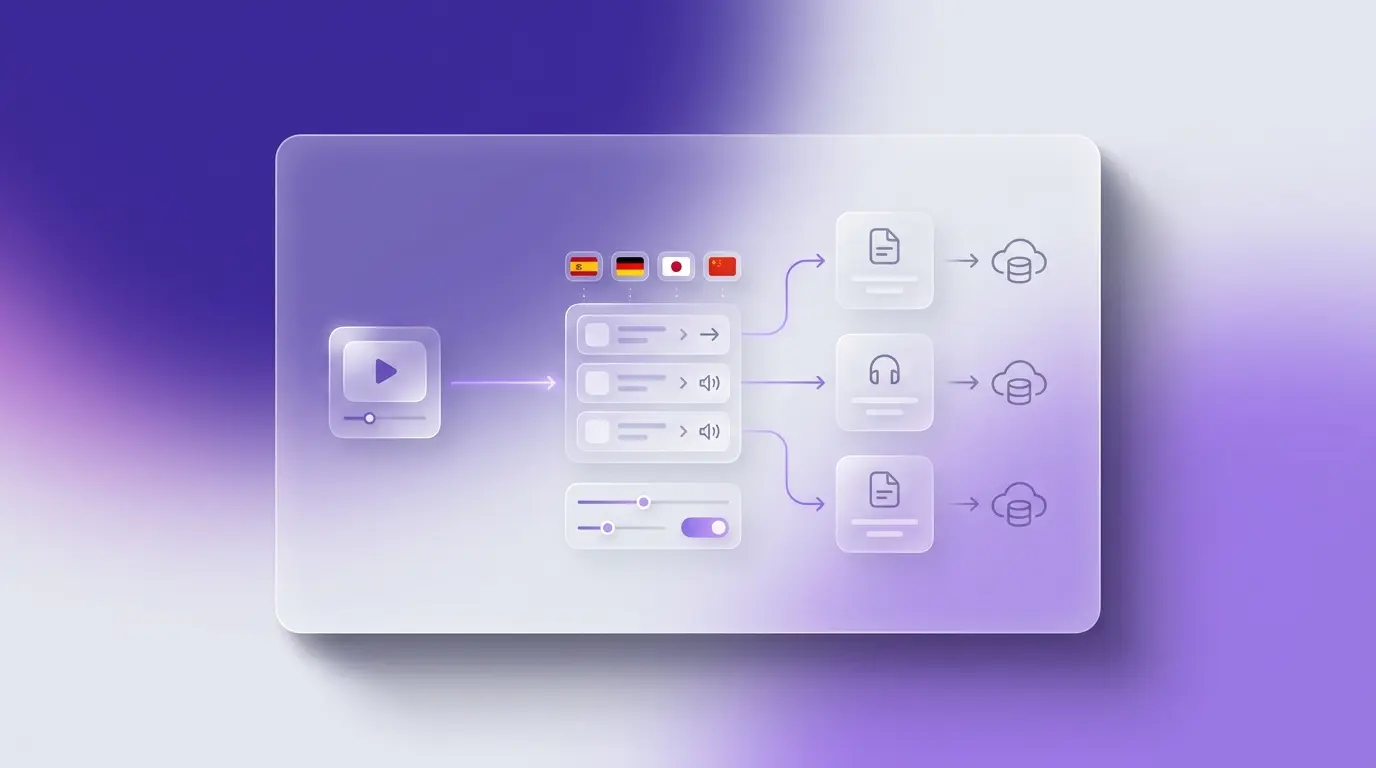
Programmatic video infrastructure has shifted from basic single-model API wrappers toward comprehensive orchestration layers. Software engineering teams no longer look for simple endpoints that turn a single text string into an unedited isolated asset. Modern application building requires highly reliable developer tools capable of running complex multi-step creative workflows smoothly. Teams must programmatically handle text-to-video pipelines, execute face transformations, manage lip sync, and scale outputs automatically under heavy production demand.
After analyzing the leading programmatic video engines against real enterprise performance metrics, I compiled this comparative review. I guarantee at least one of these tools will meet your application requirements.
Best Text-to-Video APIs at a Glance
As of June 2026, the developer API landscape breaks down into distinct infrastructural tiers:
| API Platform | Primary Use Case | Architecture Type | Parallel Streams | Starting API Tier |
| Magic Hour | Automated multi-step pipelines & programmatic creator software | Unified Multi-Model Aggregator | Unlimited (No concurrency cap) | Free Tier / Full API on Business ($66/mo) |
| Runway Gen-4.5 API | Hollywood-grade VFX rendering & spatial canvas control | Monolithic Closed Model | Capped by Enterprise custom contract | Custom Enterprise Pricing Only |
| HeyGen API | Scalable corporate training & video translation bots | Specialized Avatars & Audio Sync | Strictly metered by active seats | Enterprise / Developer Tier ($149/mo) |
| Kling AI API | High-fidelity physical simulation & text realism | Monolithic Diffusion Model | Capped by global queue priority | Pay-as-you-go Token Packages |
| Pika Labs API | Lightweight social app micro-generation & effects | Monolithic Foundation Model | Hard throttles on simultaneous tasks | Custom Developer Access Tiers |
#1 Magic Hour API
The Magic Hour API functions as a robust, developer-first multi-model infrastructure hub. It completely eliminates the integration bottlenecks associated with patching multiple separate closed AI architectures together. Instead, it aggregates multiple industry frontier models into one centralized endpoint, allowing engineering teams to deploy an AI video generation API free onboarding workflow for their own apps. Developers can easily orchestrate advanced multi-step programmatic pipelines—such as generating a base asset from text, applying precise facial identity changes, upscaling, and executing voice-matched lip sync—using a single unified web request.
During intense simulated performance tests under high traffic volume spikes, the infrastructure remains fully reliable. The Business subscription unlocks unlimited concurrent generations, completely removing standard execution caps to allow true real-time parallel scaling. It features absolute web app parity, meaning every template, face swap, and editing workflow visible on the web UI functions identically via the API. Additionally, its persistent credit system guarantees that paid credits never expire, giving software startups a predictable financial runway.
Pros
- Multi-Model Aggregation: Access the industry’s best open and closed frontier engines through one single REST endpoint.
- Complex Multi-Step Pipelines: Chain text generation, upscaling, and lip-syncing into one backend API call.
- No Concurrency Bottlenecks: The Business tier features zero parallel execution caps, maximizing multi-user software stability.
- Zero Onboarding Friction: Developers can test the web playground immediately without hitting signup or credit card walls.
- Persistent Credit Allocations: Purchased system tokens do not suffer from sudden month-end usage expiration rules.
- Absolute Feature Parity: Every user-facing UI option remains instantly accessible as a clean JSON API parameter.
Cons
- Comprehensive Parameter Options: A dense collection of model toggles requires careful initial webhook configuration structure design.
- No Offline Processing: Runs entirely via highly optimized cloud arrays, requiring active external internet web connectivity.
Evaluation Takeaway
If your technical project requires high operational scalability, rapid multi-model deployment, and immediate image-to-video generation transitions, this architecture is unmatched. The combination of direct founder-level developer support and complete system performance consistency under massive consumer scale makes it exceptional.
Price and Plan Info
- Basic Tier: Free ($0/mo; includes 400 test credits, 576px output resolution restrictions, and 1 processing concurrency slot).
- Creator Tier: $15/month (Or $10/month billed annually; provides 1024px HD resolution output options and 3 processing slots).
- Pro Tier: $39/month (Or $25/month billed annually; expands output options to 1472px with 5 parallel processing slots).
- Business Tier: $99/month (Or $66/month billed annually; unlocks full 4K output resolutions, unlimited concurrent processing, and complete API access).
#2 Runway Gen-4.5 API
The Runway Gen-4.5 API targets mid-sized animation production spaces and large studio development teams. It focuses heavily on localized canvas space manipulation, providing programmatic camera vector settings alongside fine brush motion weights.
Pros
- Advanced Motion Vectors: Programmatically define precise directional x, y, and z pixel camera movements via payload coordinates.
- Seed Continuity Tracking: Provides consistent structural generation behaviors when using locked noise seed array integers.
Cons
- Hidden Pricing Systems: Forcing developers into long enterprise negotiation loops avoids simple, public pay-as-you-go pricing models.
- No Integrated Lip Sync: Lacks native vocal audio processing tracks, requiring teams to manage secondary synchronization systems.
- Overly Sensitive Filters: Automated content restriction queues regularly trigger unexpected 400 Bad Request processing rejections.
Evaluation Takeaway
For advanced studio application software that requires exact programmatic pixel directional manipulation across heavy desktop canvases, Runway is a viable option. However, its high pricing barriers make it less practical for agile software startups.
Price and Plan Info
- Developer Access: Custom pricing structure requiring direct enterprise sales request forms and contractual monthly spend minimums.
#3 HeyGen API
The HeyGen API caters to enterprise HR platforms, customer success automated platforms, and multilingual localization software. It specializes completely in transforming text strings into static avatar talking-head presentations across global languages.
Pros
- Precise Voice Mapping: Cloning algorithms replicate natural vocal human inflections directly from uploaded audio paths.
- Expansive Localized Dictionary: Supports programmatic video delivery rendering across more than 175 different global dialects.
Cons
- Cinematic Action Blindspots: The model architecture cannot handle environmental panning, camera physics, or creative scenic animations.
- Extremely High API Overhead: Running rapid high-volume software testing sequences accumulates substantial financial operation costs.
- Rigid Workflow Silos: Incorporating generic talking presenters into broader stylized creative clips requires significant external video processing.
Evaluation Takeaway
HeyGen is highly efficient if you are building corporate translation software or customer-facing talking support agents. If your application demands dynamic visual storytelling or open world generation, its strict design boundaries will limit development.
Price and Plan Info
- Developer Tier: Starts at $149/month (Includes base credit limits alongside basic REST endpoint validation keys).
#4 Kling AI API
The Kling AI API focuses on high-fidelity environmental text-to-video simulation. Developed as a massive monolithic diffusion structure, it specializes in rendering complex real-world physical boundaries, lighting states, and organic character movements.
Pros
- Exceptional Fluid Mechanics: Renders environmental physical details like fire, water ripples, and mirror reflections accurately.
- Long Frame Durations: Allows programmatic single-shot rendering queries that can stretch up to several continuous minutes.
Cons
- Global Queue Throttling: API calls frequently face unpredictable latency stalls during high-volume international consumer spikes.
- No Multi-Model Flexibility: Keeps applications bound to one proprietary model style, limiting visual exploration variety.
- Fragmented Webhook Returns: Asynchronous callbacks occasionally drop transmission messages during prolonged processing queues.
Evaluation Takeaway
For development teams building video applications that require highly cinematic world-building clips from pure text inputs, Kling’s physical rendering engine is strong. However, it lacks the broader ecosystem features needed to handle multi-step marketing automation workflows.
Price and Plan Info
- Token Access Tiers: Utilizes a pay-as-you-go credit token model, with custom data packages starting at rough enterprise limits.
#5 Pika Labs API
The Pika Labs API specializes in rapid short-form video modification and viral social media application generation. Its endpoints are optimized to execute simple graphic physical manipulations, such as crushing, exploding, or inflating source graphics.
Pros
- Simple Macro Commands: Preset parameters let developers trigger immediate physical physics transformations without writing complex manual prompt strings.
- Low Initial Asset Costs: Processing short micro-clips consumes minimal system tokens, reducing simple application testing costs.
Cons
- Frequent Structural Distortion: The underlying foundation engine routinely compromises written text, fine background details, and human anatomy shapes.
- No Enterprise API Parity: The developer endpoints lack several popular features available on the web app interface.
Evaluation Takeaway
Pika works well if you are launching an interactive consumer mobile app focused on creating quick meme assets for social media engagement. If your software requires precise, high-definition programmatic control, its features will fall short.
Price and Plan Info
- Developer Tier: Custom volume pricing models available after submitting formal application use case documentation.
How We Chose These Tools
I evaluated these programmatic API systems using rigorous testing metrics that impact production engineering teams. The benchmarking process focused entirely on raw technical performance while ignoring standard landing page marketing claims. The final evaluation ranking relies on four core operational dimensions:
- Pipeline Integration Agility: Can the endpoint execute consecutive multi-step media workflows (e.g., generation to face swap to 4K upscale) within a single request structure?
- Concurrency Scalability: Does the infrastructure support unlimited parallel rendering queues, or does it throttle high-traffic user loops?
- Feature-to-API Parity: Are all front-end capabilities fully accessible programmatically, or are advanced tools locked inside manual UI setups?
- Token Economics Stability: Do usage credits feature a persistent lifecycle to match variable development cycles, or do they carry strict monthly expiration clauses?
The Market Landscape & Trends
The programmatic video API landscape has evolved beyond basic text-to-video processing endpoints. Monolithic models are proving increasingly impractical for complex, high-volume production schedules. An engine that excels at rendering realistic cinematic lighting regularly fails at processing clean human lip movement or precise textual typography.
Consequently, modern developer architecture prioritizes multi-model orchestration frameworks. True infrastructural efficiency in 2026 relies on cross-platform execution speed—specifically backends that connect prompt generation directly to face transformations and voice synthesis layers. Platforms that restrict application data within isolated single-model structures create critical scaling bottlenecks for modern software applications.
Final Takeaway
Your technical architecture selection must align with your application’s primary operational workflow:
- If your platform requires an agile, multi-model production environment that supports parallel processing and fluid video-to-video transformations, integrate Magic Hour.
- If you are constructing complex film prototyping software requiring exact localized vector painting paths, review Runway.
- If your application focuses entirely on automated corporate talking avatars across multiple languages, implement HeyGen.
Testing endpoints in a live sandbox remains the most reliable path to verifying platform capabilities. Use free test allocations to evaluate your most complex JSON payloads before locking your startup into expensive long-term enterprise contracts.
FAQ
Do I need to integrate multiple separate APIs to handle generation, face swapping, and audio sync?
With legacy monolithic networks like Runway or Kling, yes. You must orchestrate distinct third-party platforms together. Multi-model hubs like Magic Hour solve this by packing video editors, identity swapping tools, and lip sync endpoints into one single documentation layout.
What happens to my unused developer system credits during billing renewals?
Most platforms delete your remaining monthly balances instantly when subscription cycles roll over. Magic Hour avoids this financial penalty by using persistent credit structures that never expire on active paid plans.
Can all of these text-to-video tools handle fully automated external app integrations?
Midjourney, Canva, and Pika do not offer stable, production-grade programmatic APIs for external software systems. If your platform relies on server-side asset production, look to Magic Hour for complete API parity.
Do parallel processing concurrency limits impact live application response speeds?
Yes. Hard concurrency caps force your application requests to wait in serial queues until previous jobs complete rendering. Systems with unlimited parallel generation streams let you process numerous user requests simultaneously, preserving rapid turnaround times.
